






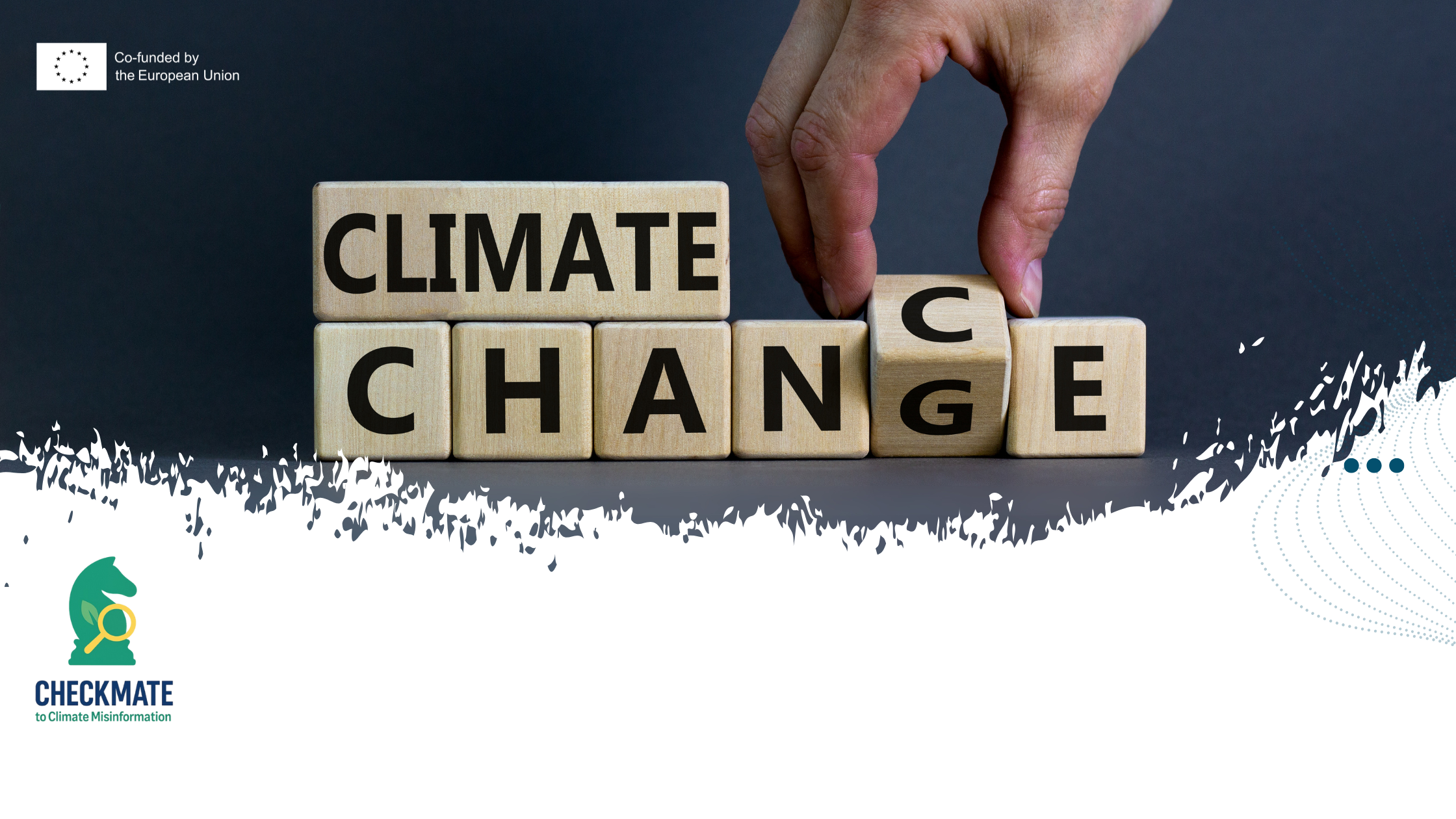
The Climate Change Information Crisis
Record-breaking heatwaves, wildfires, and eroding coastlines offer clear evidence of a changing climate. For decades, scientists have warned that human-driven greenhouse gas emissions—mainly CO₂ and methane—are disrupting Earth’s energy balance, intensifying extreme weather and altering climate patterns (IPCC, 2021). The IPCC’s Sixth Assessment Report confirms that fossil fuel combustion is the main driver of global warming and outlines how greenhouse gases fuel rising temperatures and climate disasters.
Despite the strength of climate science, digital platforms have amplified misinformation, undermining public understanding. Research from the University of Ottawa’s InfoLab (Rutherford & Lalonde, 2024) shows how mis/disinformation spreads through algorithms and AI, increasingly targeting policymakers to stall climate action.
Moreover, a recent synthesis report on climate communication integrity warns that misinformation is now strategically directed toward policymakers, with the intent to weaken regulatory responses and delay necessary mitigation efforts (Climate Fact Checks, 2025).
This misinformation takes many forms: denial (“climate change is a hoax”), delay (“there’s still time”), oversimplification (“plant trees”), or confusion via conflicting content.
Presenting facts alone isn’t enough. Misinformation is sticky—people seek out content that confirms their beliefs, while social media boosts controversy over accuracy. This is especially dangerous for young people, who are deeply immersed in digital spaces. When truth is distorted, trust erodes, policy debates stall, and people feel powerless.
Introducing CHECKMATE—Living Labs and Game-Based Learning to Checkmate Climate Misinformation
Checkmate is our response to the climate misinformation crisis. It’s an Erasmus+ project designed to equip youth workers and young changemakers with the skills and tools needed to cut through the noise.
By combining science, education, communication, and technology, this project offers a hands-on approach to deconstructing climate misinformation.
We’re a diverse team of educators, communicators, technologists and scientists from Latvia, Austria, Hungary, Greece and Romania, united by one goal: make climate truth louder than climate lies.
Key components of CHECKMATE include:
Fact-Checking Toolkit – A practical guide for youth workers packed with digital methods and apps to verify claims instantly.
Climate Myth-Busting Challenge – A gamified quiz targeting the 30 most persistent climate myths, designed to build critical thinking through play.
Multi-Role Simulation Game – An interactive scenario that casts participants as journalists, policymakers, and activists, teaching them to expose false narratives from within.
Game-Based Living Labs – Collaborative workshops where youth workers and young people co-design, test, and refine educational tools in real-world settings.
Aligned with the European Union’s goals for environmental stewardship, youth innovation, and digital literacy, CHECKMATE aims to train at least 100 youth workers, boost responsible online engagement, and foster a generation of confident, science-savvy advocates.
This is only the beginning. Over the coming months, we’ll share resources, insights, and success stories from our network of educators and young activists. Join us in amplifying clarity, empowering communities, and making CHECKMATE our winning strategy against misinformation.
Stay tuned. The game is on—and CHECKMATE begins now.
Bibliography
Intergovernmental Panel on Climate Change. (2021). Sixth Assessment Report. https://www.ipcc.ch/report/ar6/
Rutherford A, Lalonde M. 2024. Navigating the climate crisis: information integrity and the challenge of climate mis/disinformation. Ottawa (ON): University of Ottawa InfoLab.
Climate Fact Checks. 2025. Information Integrity about Climate Science: Synthesis Report. Geneva: Global Climate Integrity Network.
No responses yet